
One problem, one rule
“This EHR labels a wellness-visit code with the wrong code system.” One small rule fixes exactly that, and nothing else.
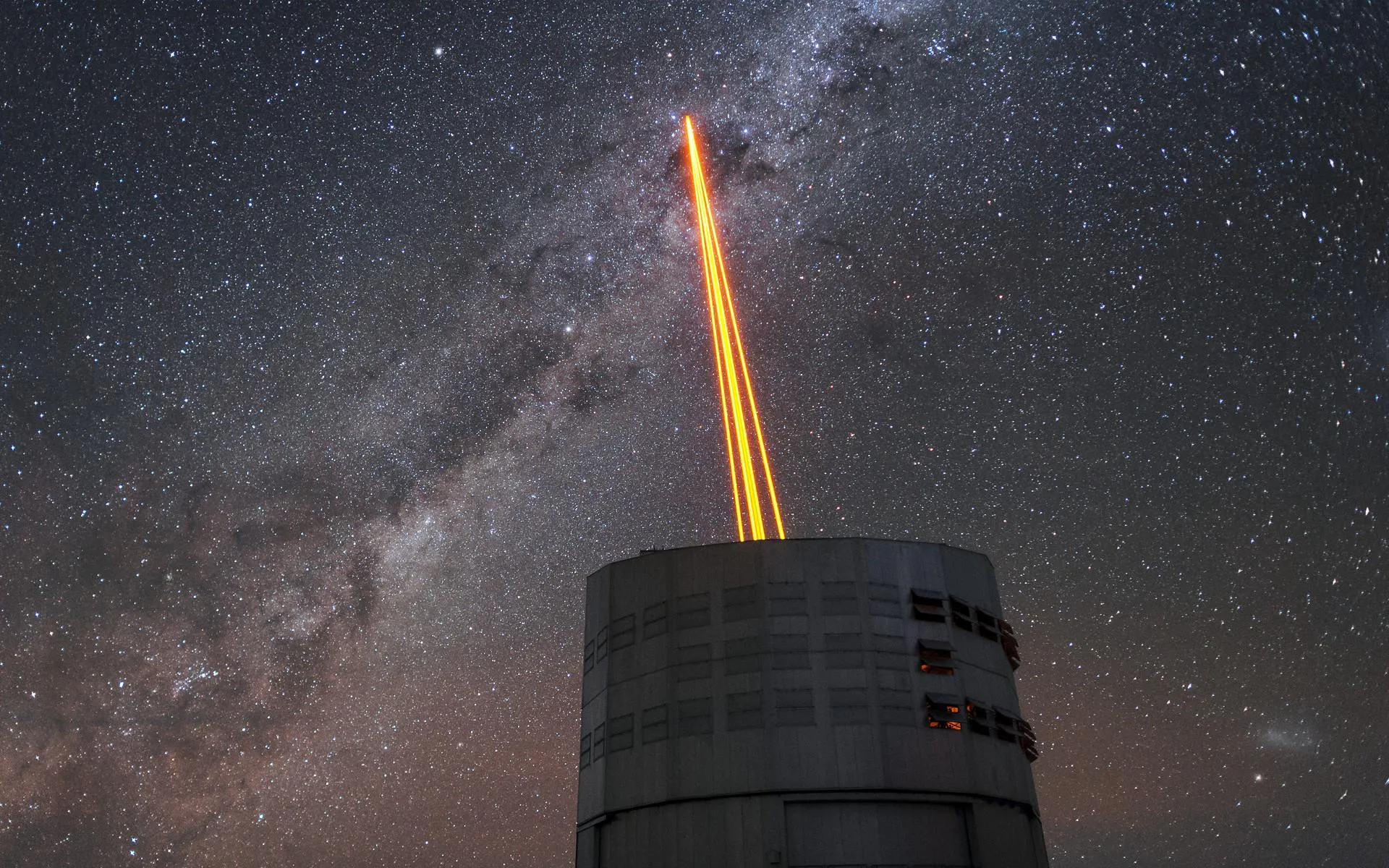
Four lasers leave the Very Large Telescope in Chile to create artificial “guide stars”. Photo: ESO/F. Kamphues, licensed under CC BY 4.0. Resized for the web. ESO does not endorse OpenDQM.
Starlight travels for thousands of years, perfectly sharp, and is smeared in its last fraction of a second by the air above the telescope. That is why stars twinkle. A bigger telescope alone does not fix it: it just collects more blurred light.
Healthcare quality measurement has the same problem. The care is real and well documented. But on its way from the EHR to the measure, the record passes through layers of “turbulence”: different codes, different fields, notes instead of structured results. By the time it reaches the calculator, it no longer looks like what the measure expects.
The result is not an error message. It is a wrong number that looks right.
Make a star you know. A laser lights up a small patch of the upper atmosphere, creating an artificial “guide star”. Astronomers know exactly what it should look like: a perfect point.
Measure the distortion. A sensor watches the guide star and measures precisely how the air is bending it at this moment.
Correct it. A thin, flexible mirror changes shape many times per second to undo the distortion before the light reaches the camera.
Look at the real stars. With the blur removed, the telescope sees detail that was invisible before, and the astronomers know exactly how much correction was applied.
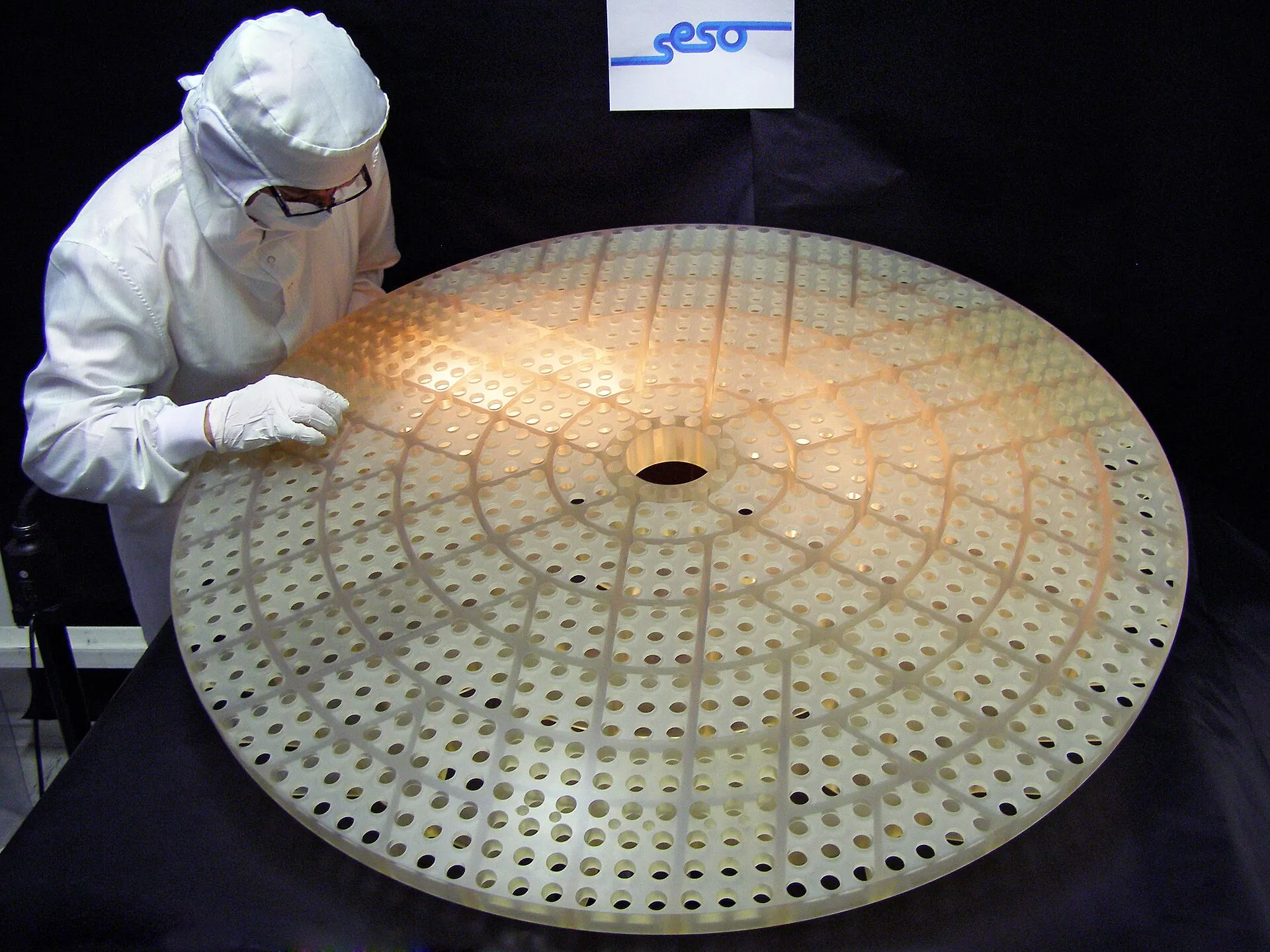
The back of the Very Large Telescope’s flexible mirror system. Each hole holds a tiny actuator that pushes on its own spot of a mirror only 2 mm thick. Photo: ESO/SESO, via Wikimedia Commons, licensed under CC BY 2.0. Resized for the web. ESO does not endorse OpenDQM.
The “flexible mirror” is not one big piece moving all at once. It is a thin shell of glass with 1,170 tiny actuators behind it, each pushing on its own spot, independently of its neighbours. The turbulence is different in every part of the sky, so the correction has to be different at every point too.
OpenDQM works the same way. There is no single fix for “bad EHR data”. There are many small, specific corrections, each aimed at one precise problem in one place:
One problem, one rule
“This EHR labels a wellness-visit code with the wrong code system.” One small rule fixes exactly that, and nothing else.
Each rule works on its own
Rules are written and checked one at a time, so each can be reviewed, signed, improved or turned off without touching the others.
Together, a sharp picture
Hundreds of small, precise corrections add up to a result you can trust, just as 1,170 small pushes add up to a sharp image of a star.
| At the telescope | In OpenDQM |
|---|---|
| Starlight: the real object, perfectly sharp at its source | Patient care: what clinicians actually did |
| The atmosphere: blurs the light on the way in | EHR differences: the same care recorded in different ways |
| The guide star: a reference whose true shape is known | Known answers: official test patients with published results, and the EHR’s own certified quality reports |
| The sensor: measures exactly how the light is bent | The account: for every patient not counted, what was missing and where |
| The flexible mirror: 1,170 independent pushes cancel the distortion point by point | Correction rules: many small, independent fixes, each for one specific problem in one EHR |
| A sharp image, with the correction on record | A trustworthy score, with every correction disclosed |
The same breast cancer screening measure, run on a real EHR’s data:
Without correction, the measure saw nothing: no error, no warning, just zero. The mammograms were all there, recorded in the EHR’s own words instead of a standard code. With the corrections, the result matched the certified calculator, and the number of patients screened matched exactly, at 291.
Astronomers do not hide their corrections. They record them, so anyone can check the image. OpenDQM works the same way.
Every correction is labelled
Each change carries the name of the rule that made it, so any result can be traced back to the original data.
Safe fixes count. Guesses wait.
Simple re-labelling counts straight away. Anything that adds meaning, like turning free text into a code, counts only after a named expert signs it.
Two numbers, side by side
A reporting number uses only signed corrections. An improvement number shows what is possible. The gap between them is shown, never hidden.
Fix it once, for everyone
A correction for one EHR helps every organisation that uses that EHR, and shows the vendor exactly what to fix at the source.
We cannot eliminate the noise in clinical data. We can make it visible, correct what is safe to correct, and make reliable quality measurement affordable for everyone.
Want the technical detail? Read How the calculator works.